Research
Six directions, one toolkit
Our work links superconducting microwave circuits to magnons, mechanical resonators and light. These hybrid quantum circuits let us build quantum-limited amplifiers, nonreciprocal devices, transducers and quantum sensors.
Superconducting circuits and quantum-limited amplification
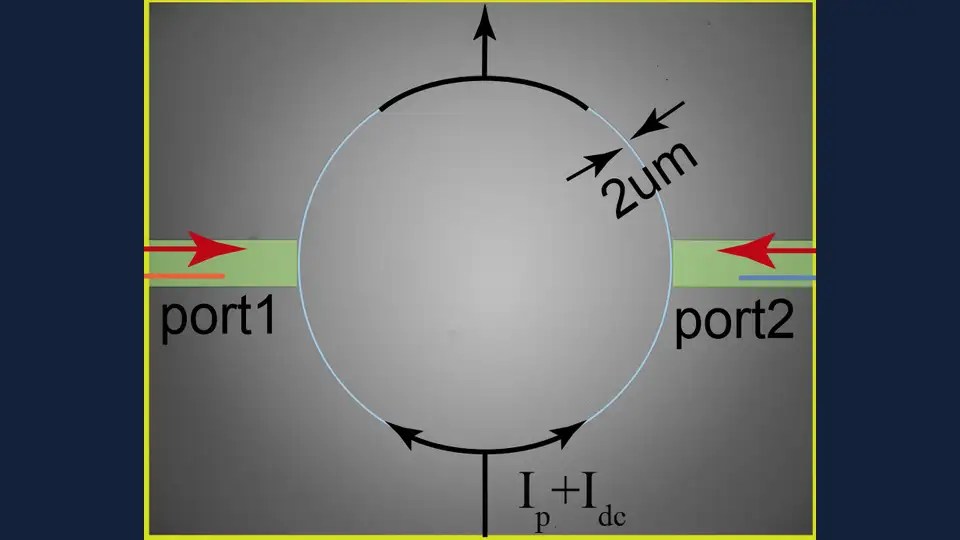
Fast and accurate qubit measurement is essential for quantum information processing. We develop quantum-limited parametric amplifiers and amplified interferometric schemes that improve the dispersive readout of superconducting qubits. Using three-wave-mixing devices that generate two-mode squeezed states, we also distribute and stabilize entanglement between remote superconducting qubits, a key ingredient for modular quantum computing.
qubit readout · parametric amplifiers · remote entanglement
Hybrid magnonics
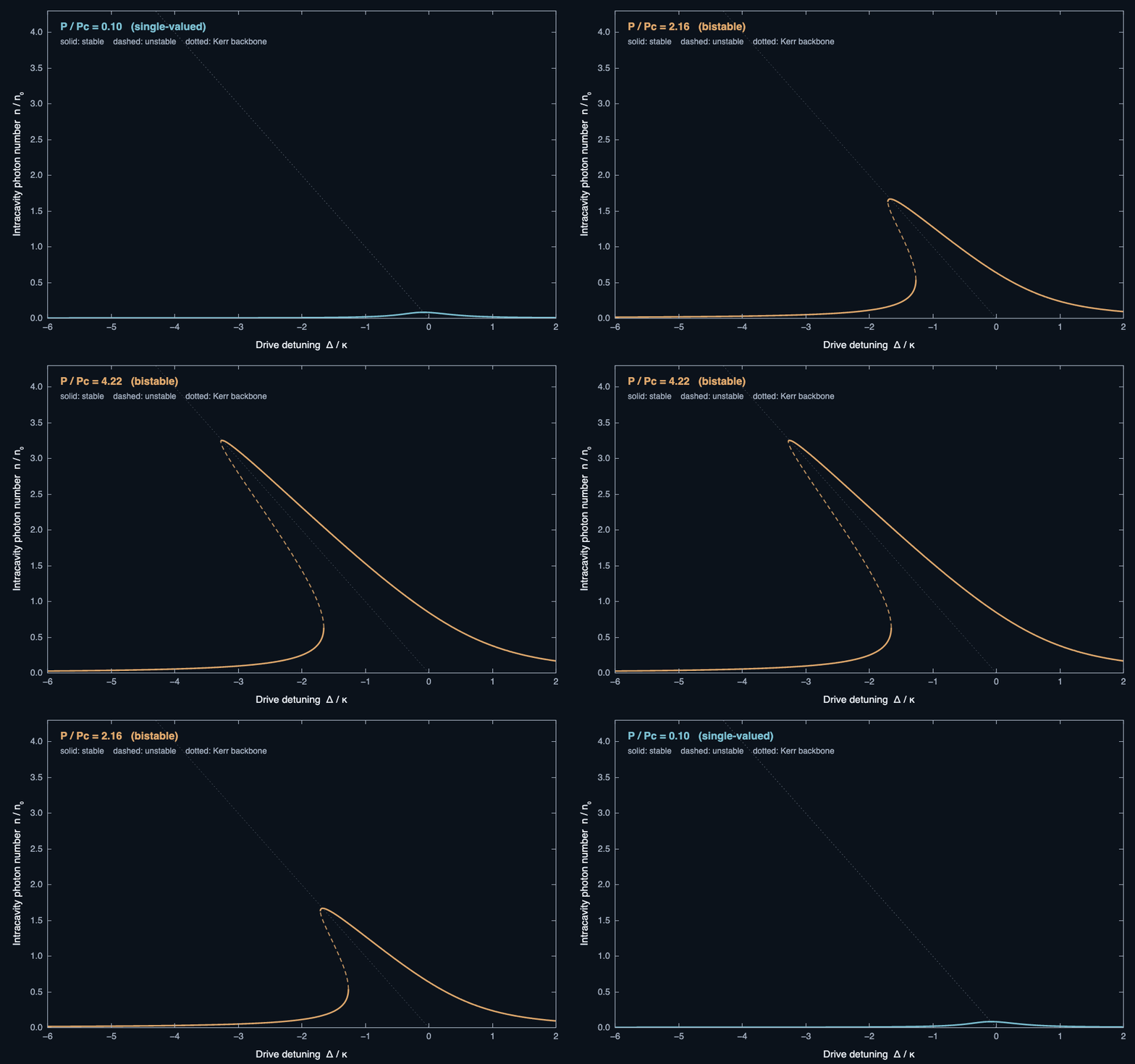
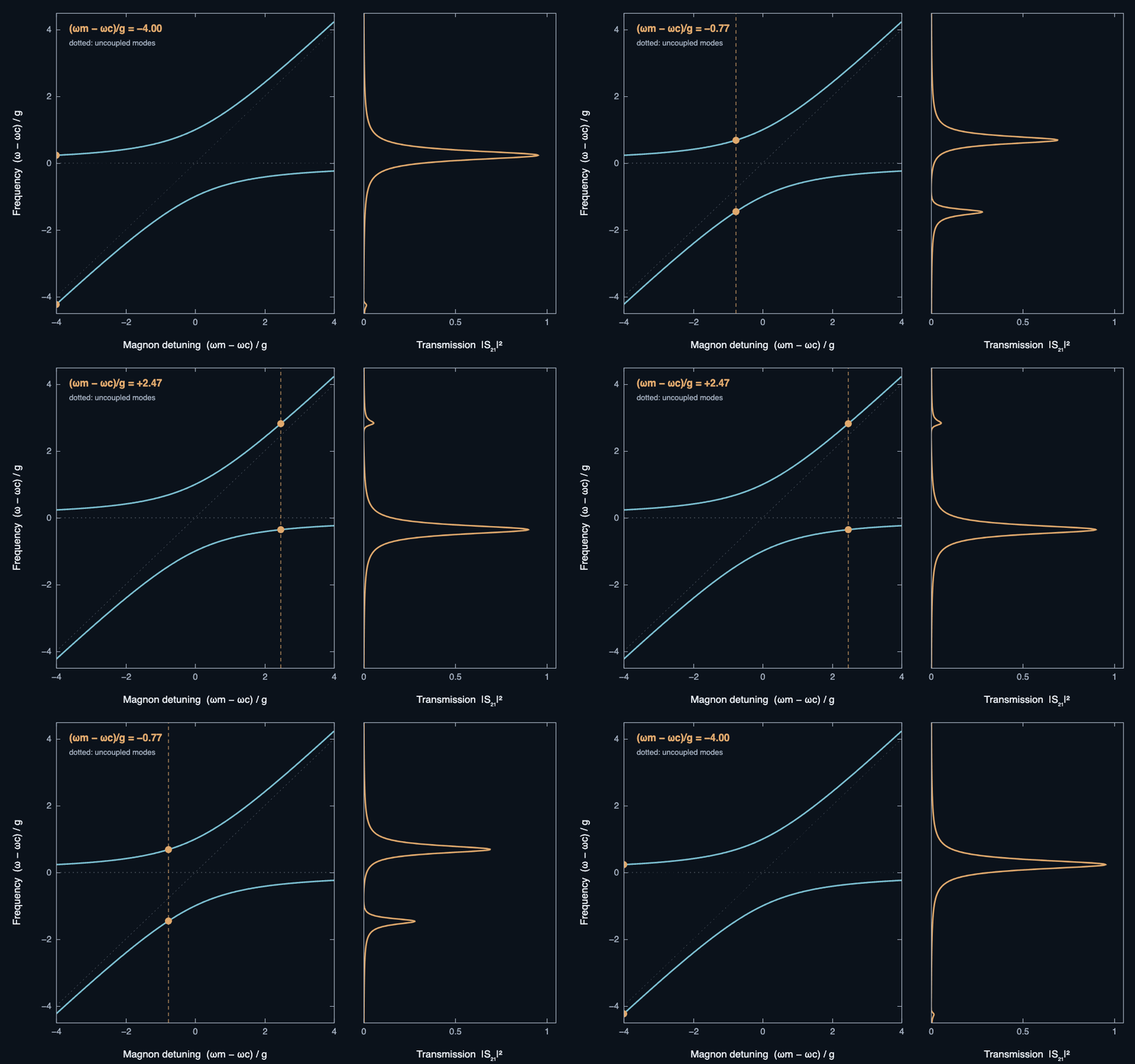
We couple magnons, the collective spin excitations of YIG spheres, to superconducting microwave resonators to form hybrid magnon–photon states. We study how these magnon polaritons can be amplified and how they route signals in one direction, with applications in magnetometry and on-chip signal processing.
YIG spheres · magnon polaritons · magnetometry
Microwave–optical transduction
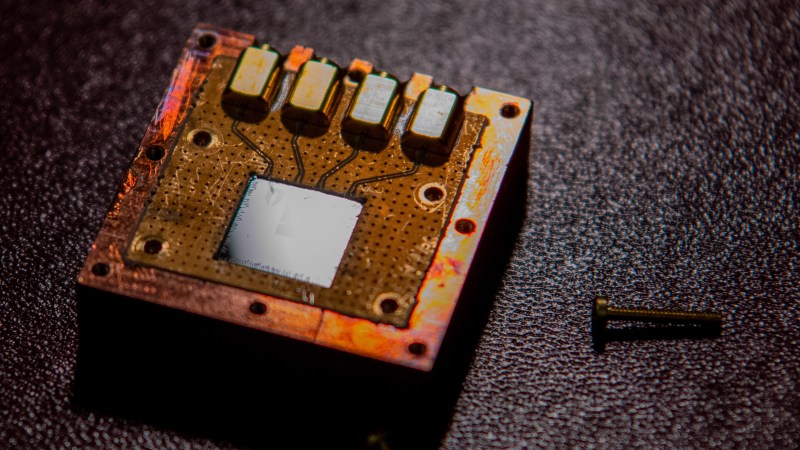
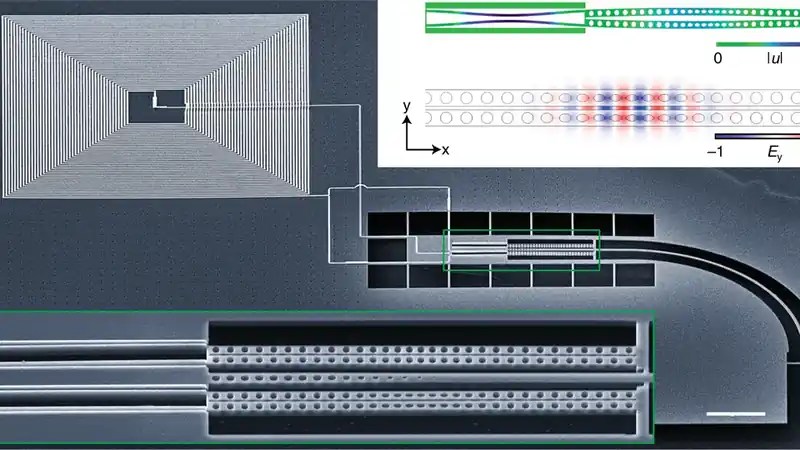
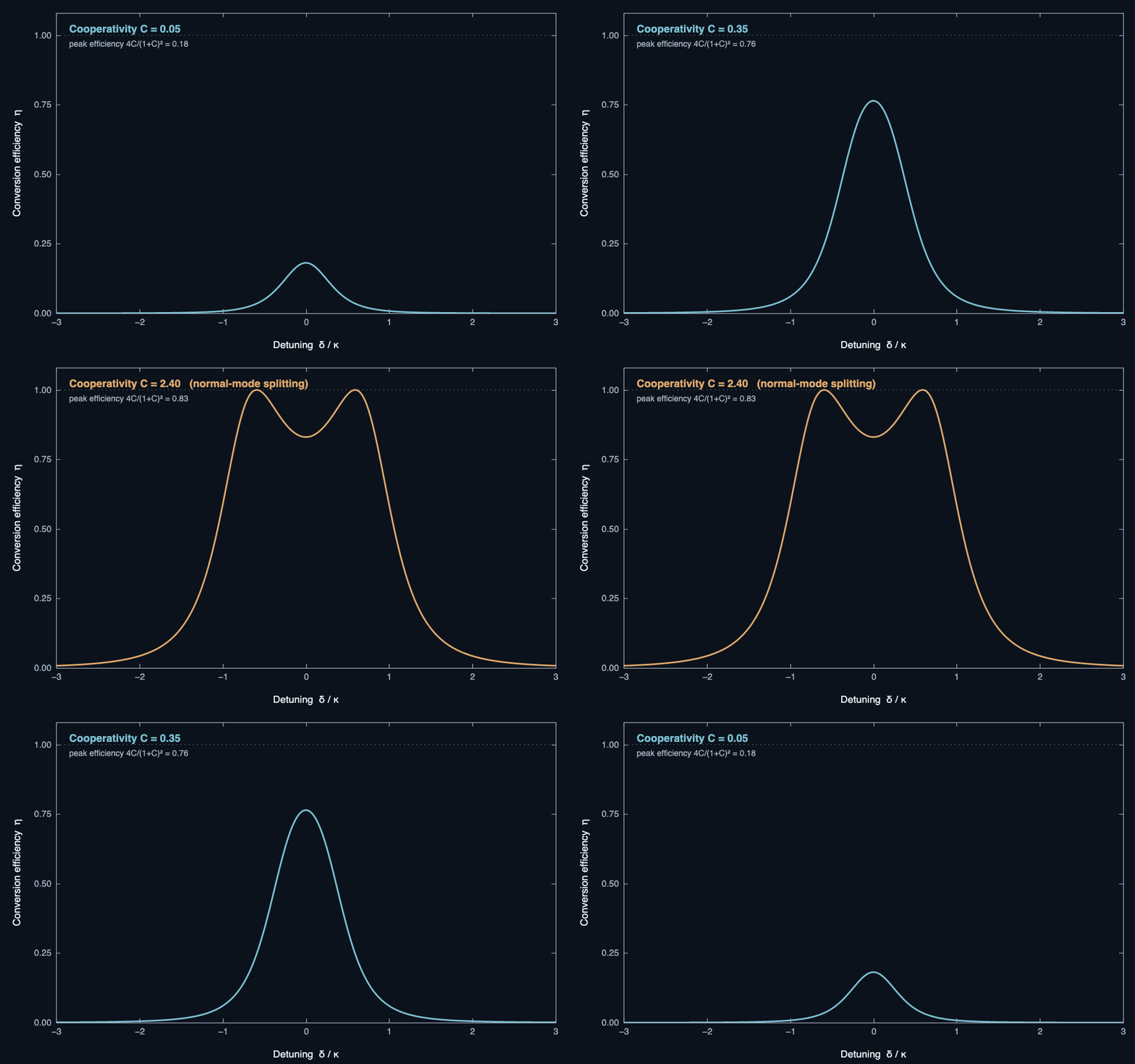
Electro- and optomechanics study how mechanical resonators interact with electromagnetic fields through radiation pressure. We use these interactions to explore quantum coherence and to convert photons in both directions between the microwave and optical domains, linking superconducting quantum processors to optical networks. We are extending this approach to magnonic and electro-optic interfaces.
optomechanics · electro-optics · quantum networks
Nonreciprocity and noise control
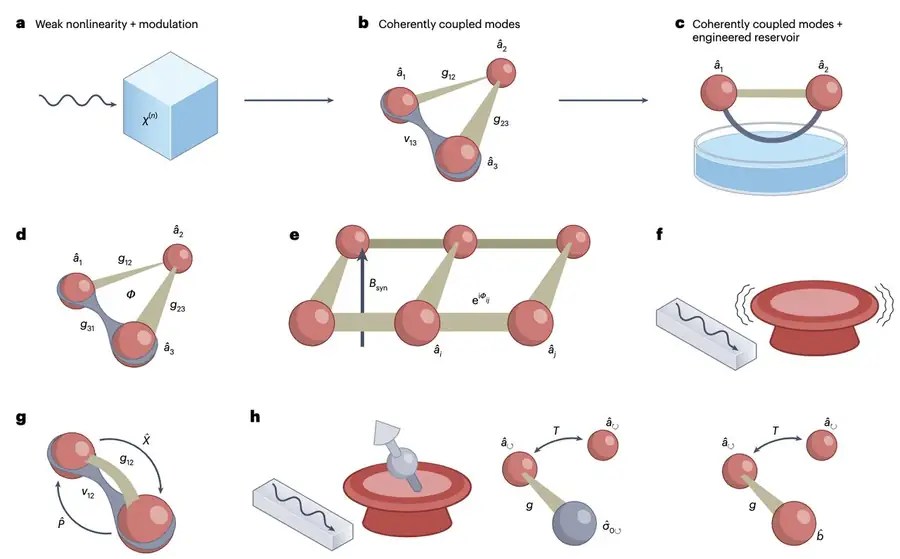
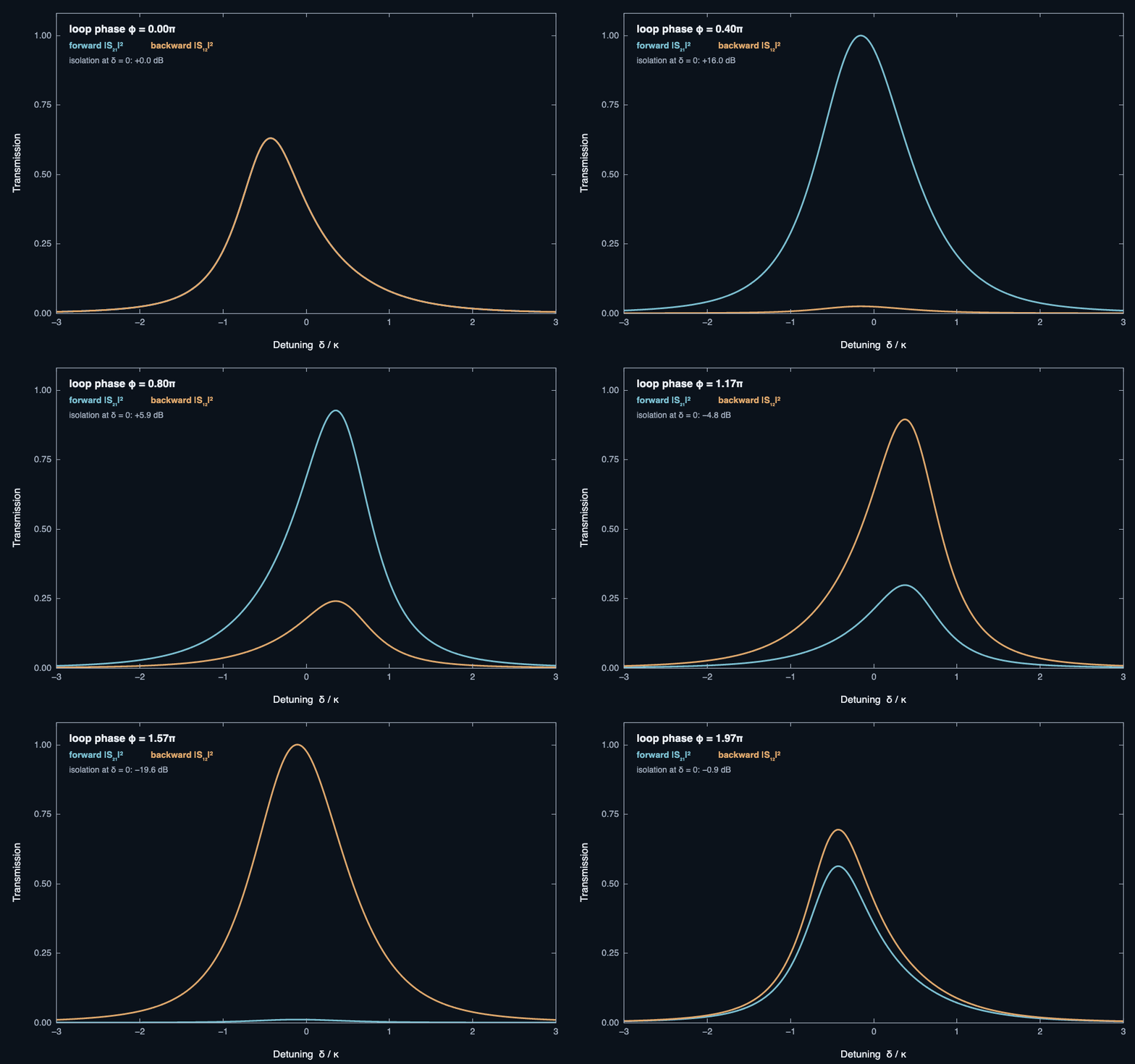
Nonreciprocal devices such as circulators and isolators let signals travel in one direction only, protecting fragile quantum circuits from noise. We build them without magnets, using mechanical motion, nonlinearity and engineered dissipation, and apply the same ideas to control the flow of thermal noise and heat in quantum devices.
circulators · thermal noise · reservoir engineering
Quantum sensing and imaging
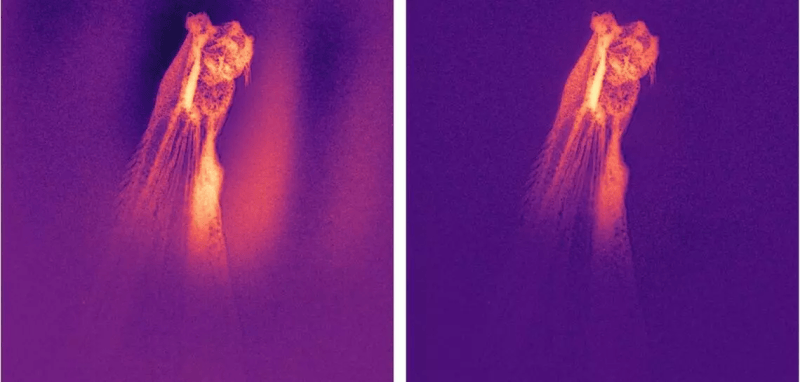
We develop high-resolution, non-invasive quantum sensors, with the goal of demonstrating a quantum scanner for imaging and clinical diagnostics. Instead of probing biological samples with intense light, we use a small number of quantum-correlated photons from spontaneous parametric down-conversion, matching or exceeding classical visibility while sparing delicate, light-sensitive materials.
quantum OCT · entangled photons · biomedical imaging
Topological integrated quantum systems
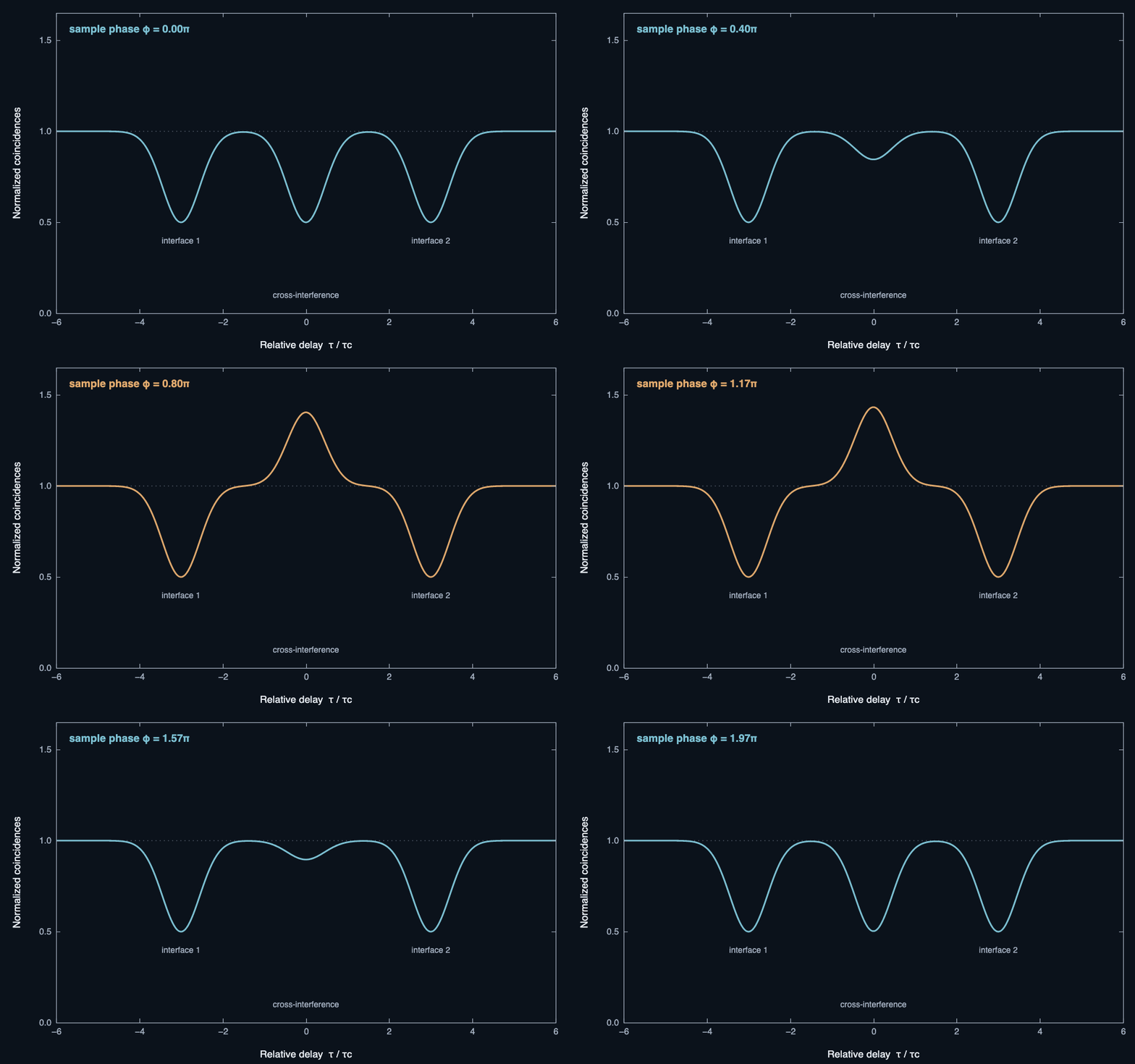
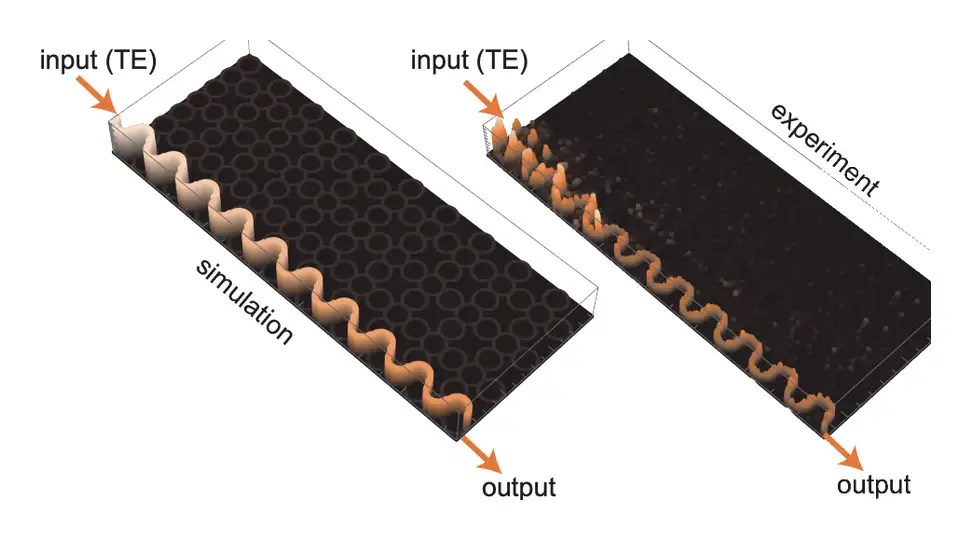
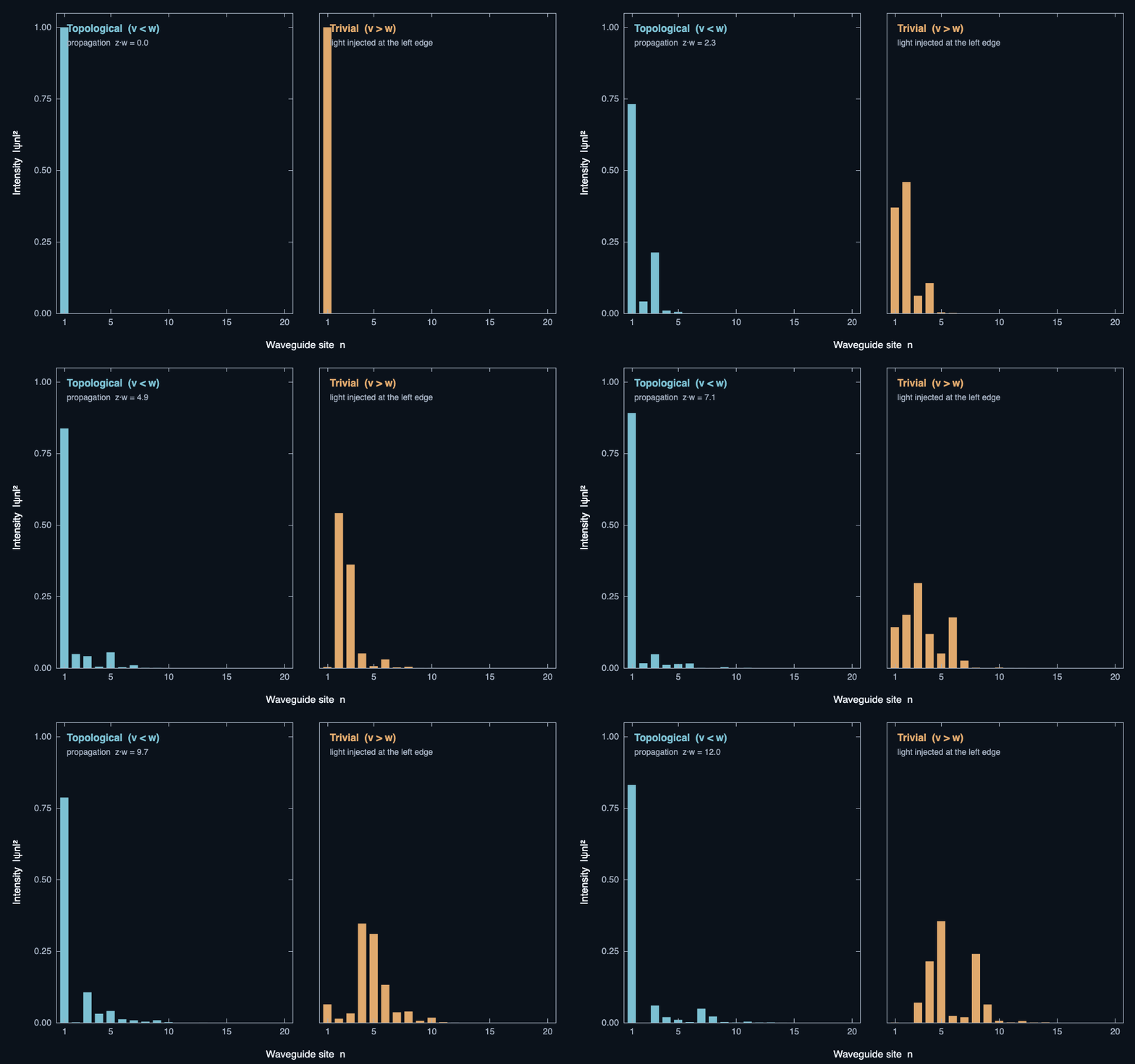
Topological photonic insulators guide light through edge states that are protected against defects and scattering. We generate entangled photon pairs from topological resonances in the bulk of Floquet topological lattices on photonic chips, which reach high quality factors without physical cavity boundaries. Our aim is an efficient, robust and tunable quantum light source on a topologically protected nanophotonic platform.
Floquet photonics · entangled photons · integrated photonics
Our research is funded by